Winning Communities Through Trusted Voices
Successful campaigns are built on relationships, and they are won through conversations that continue well after the candidate leaves the room. Every neighborhood has trusted voices who naturally bring people together, share information, and influence how local issues are understood. These community leaders help shape the conversations that determine how voters view a candidate, a campaign, and the future of their community.
Research shows that information moves through social networks. Neighbors talk to neighbors. Parents talk to parents. Community leaders share ideas with the people who trust them. Opinion leaders act as important connectors who interpret information, frame issues, and help others make sense of what is happening around them. When these trusted voices engage with a campaign, they become powerful advocates who extend the campaign's reach far beyond what advertising alone can accomplish.
The strongest local campaigns understand that controlling the narrative is not about controlling every conversation. It is about ensuring that the campaign's story is present in every neighborhood through trusted relationships. When a voter hears about a candidate from a respected PTA leader, a business owner, or a long-time resident, the message arrives with credibility that no mail piece or advertisement can replicate.
House Parties Reveal the Network
House parties create one of the most effective opportunities to build these neighborhood networks. Bringing together community leaders and their neighbors allows the campaign to create authentic conversations around local issues while strengthening relationships among people who already know and trust one another. These gatherings help identify the individuals who naturally influence community discussions and who are most likely to carry the campaign's message into their own networks.
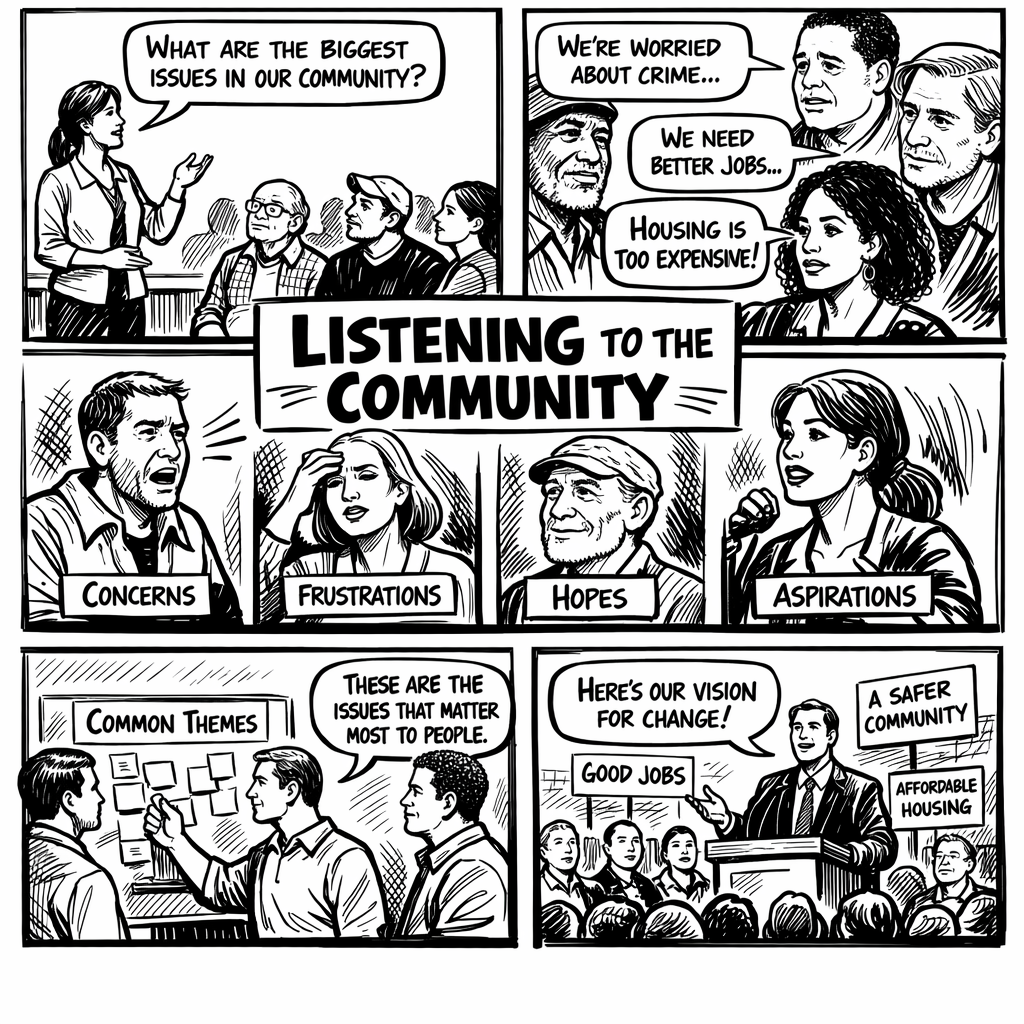
The purpose of these events is not simply to deliver information. The purpose is to discover how people already understand the issues affecting their community. Strong campaigns listen carefully to the concerns, frustrations, hopes, and aspirations expressed by residents. Over time, common themes emerge. Those themes become the foundation of a campaign narrative that reflects the lived experiences of voters rather than assumptions made by consultants or political insiders.
Narrative Spreads Through Relationships
When trusted community members begin sharing that narrative, it gains momentum. A conversation at a house party becomes a discussion between neighbors. A discussion between neighbors becomes a conversation at school pickup, a community event, a place of worship, or a local business. The campaign's message begins to spread through relationships rather than advertisements.
The most effective campaigns actively identify and engage the people who influence others. These individuals often become volunteer recruiters, house party hosts, precinct leaders, neighborhood ambassadors, and trusted advocates for the campaign. Their value extends far beyond a single vote because they help introduce the campaign to dozens of additional voters through relationships that already exist.
Measure the Strength of the Network
Success should therefore be measured not only by attendance at events or the number of voters contacted, but also by the strength of the community network being built. Strong campaigns track new supporters identified, community leaders engaged, volunteers recruited, future hosts discovered, neighborhood concerns documented, and follow-up conversations created. These indicators reveal whether the campaign is building the relationships necessary to sustain and spread its message.
Local campaigns are won neighborhood by neighborhood. Advertising can create awareness. Direct mail can reinforce recognition. Technology can improve organization. But trusted community voices create belief. When respected leaders begin sharing a campaign's message with the people around them, the campaign gains something far more valuable than visibility: it gains credibility.
Build Momentum Through Trust
The goal is not simply to tell voters what to think.
The goal is to build a network of trusted relationships that carries the campaign's story throughout the community and transforms support into momentum.
How Winning Campaigns Apply This
Winning campaigns identify respected local connectors early, use house parties and neighborhood conversations to listen for common concerns, and then organize those trusted voices into volunteer, hosting, and turnout leadership roles.
How BRB Campaigns Supports This
brb Campaigns helps teams track community leaders, organize neighborhood events, document local concerns, recruit volunteer ambassadors, and connect trusted messengers to the field execution that turns relationships into turnout.
Related BRB workflow: House party organizing, neighborhood leadership development, volunteer recruitment, and trusted-messenger turnout follow-up
Key Takeaways
- Trusted community members amplify campaign messages more credibly than impersonal advertising because information moves through existing social relationships.
- House parties and neighborhood gatherings are effective because they reveal the people already shaping local conversations and give campaigns a setting to listen before they persuade.
- The best field programs measure network strength by tracking engaged leaders, recruited volunteers, discovered hosts, and follow-up conversations, not just event attendance.