Turning Community Leaders Into Campaign Supporters
Successful campaigns are built on relationships, and some of the most valuable relationships already exist within the neighborhoods a campaign hopes to serve. Every community has trusted voices - people who connect neighbors, lead organizations, organize events, support local schools, and help shape conversations about the future of the community. House parties create an opportunity to bring those voices together, strengthen existing relationships, and build momentum that extends far beyond a single event.
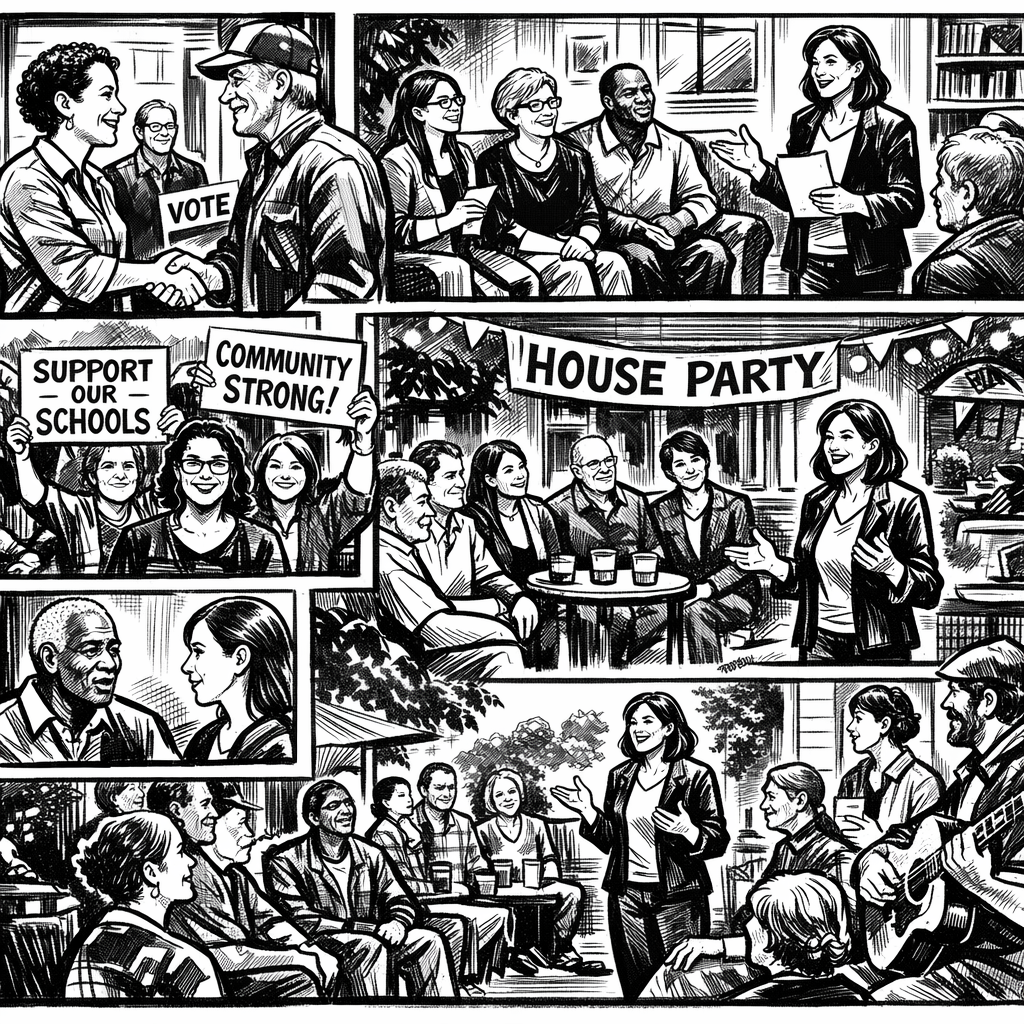
Research consistently shows that political participation is influenced by social networks and trusted relationships. People are more likely to engage when they hear about a candidate from someone they already know and respect. House parties create an environment where those conversations can happen naturally. Rather than asking voters to attend a formal campaign event, house parties invite neighbors into a familiar setting where they can meet the candidate, ask questions, share concerns, and discuss issues that matter most to their community.
The value of a house party extends far beyond introducing the candidate. A successful gathering allows supporters to discover common interests, build new relationships, and become active participants in the campaign. It provides an opportunity to identify future volunteers, recruit community advocates, uncover neighborhood concerns, and strengthen trust between the campaign and the people it hopes to represent. Many of the strongest volunteers, neighborhood ambassadors, and campaign leaders begin their involvement because someone they trust invited them to a conversation in a comfortable environment.
Trusted Hosts Create Authentic Conversations
The most effective hosts are individuals who are already respected within the community. These may include PTA leaders, neighborhood organizers, coaches, teachers, small business owners, nonprofit leaders, faith community members, or long-time residents. Their influence is valuable not because of their title, but because they have earned trust through years of service and involvement. When these community leaders introduce a candidate to their network, they create opportunities for authentic conversations that advertising and campaign literature simply cannot replicate.
A successful house party should create measurable momentum for the campaign. Strong campaigns look beyond attendance and focus on outcomes, including:
- New supporters identified.
- Volunteers recruited.
- Future hosts discovered.
- Community concerns documented.
- Follow-up conversations scheduled.
- New relationships established throughout the neighborhood.
Integrate House Parties Into GOTV
House parties work best when they are integrated into a broader voter engagement strategy. A guest who attends a house party may later receive a phone call, participate in a community event, volunteer for a canvass, host a future gathering, or become part of the campaign's Get Out The Vote effort. Each interaction builds upon the previous one, creating familiarity, trust, and a stronger sense of ownership in the campaign.
Local campaigns are won through community relationships. Advertising can create awareness, direct mail can reinforce recognition, and technology can improve organization, but trusted community voices create momentum. House parties give campaigns an opportunity to bring together the people who naturally influence others, strengthen neighborhood connections, and build a network of supporters who are excited to share the campaign with friends, family members, coworkers, and neighbors. The goal is not simply to host an event. The goal is to build a community that helps carry the campaign forward and transforms individual support into collective action.
How Winning Campaigns Apply This
Winning campaigns identify respected local hosts, use house parties to surface neighborhood concerns and future volunteers, and then connect those new relationships to the wider field and turnout plan.
How BRB Campaigns Supports This
brb Campaigns helps teams track hosts, supporters, neighborhood concerns, follow-up tasks, and volunteer pathways so community gatherings translate into organized outreach and GOTV execution.
Related BRB workflow: House party organizing, volunteer recruitment, community follow-up, and turnout activation
Key Takeaways
- Trusted community leaders make campaign introductions more effective because people are more likely to participate when outreach arrives through relationships they already value.
- House parties should be evaluated by the volunteers, hosts, supporters, and follow-up conversations they produce, not just the number of people in the room.
- The best campaigns connect house parties to later canvassing, phone outreach, community events, and GOTV work so each relationship-building moment strengthens the next voter contact.